I met a woman in New Zealand in 2019, Hannah. She was striking. Long black hair, and the brightest blue eyes I’ve ever seen.
Blue eyes come from a variant in the HERC2 gene that leaves very little melanin in the front layer of the iris. Light is scattered in the eye, and it appears blue in the same way the sky appears blue.
Blue eyes in England, where Hannah is from, are not uncommon. They date back thousands of years. In 1903, workers in Cheddar Gorge dug up the remains of an ancient hunter-gatherer, now known as Cheddar Man, who lived over 10,000 years ago. Genetic research in 2018 suggests he was dark-skinned, with curly dark hair and blue or blue-green eyes, like Hannah. Except Hannah’s skin was light.
Melanin in the skin, which causes its dark appearance, protects skin from harmful sun. As human populations moved into northern latitudes, sun exposure became a smaller problem than vitamin D requirements. Skin tones lightened, because lighter skin lets in more UVB, which the body needs to produce vitamin D.
But if so, how was Cheddar Man dark-skinned?
The answer? A diet rich in wild fish and game provided the vitamin D these early humans needed.
Later, human populations moved from foraging to agriculture. Grains and bread, which are low in vitamin D, became staples in the human diet, displacing wild game. Over generations, pale skin, better at producing vitamin D, won out. It’s how human bodies adapted to poorer diets. And so I met Hannah, with her light skin, long black hair, and crystalline blue eyes.
Why am I talking about any of this?
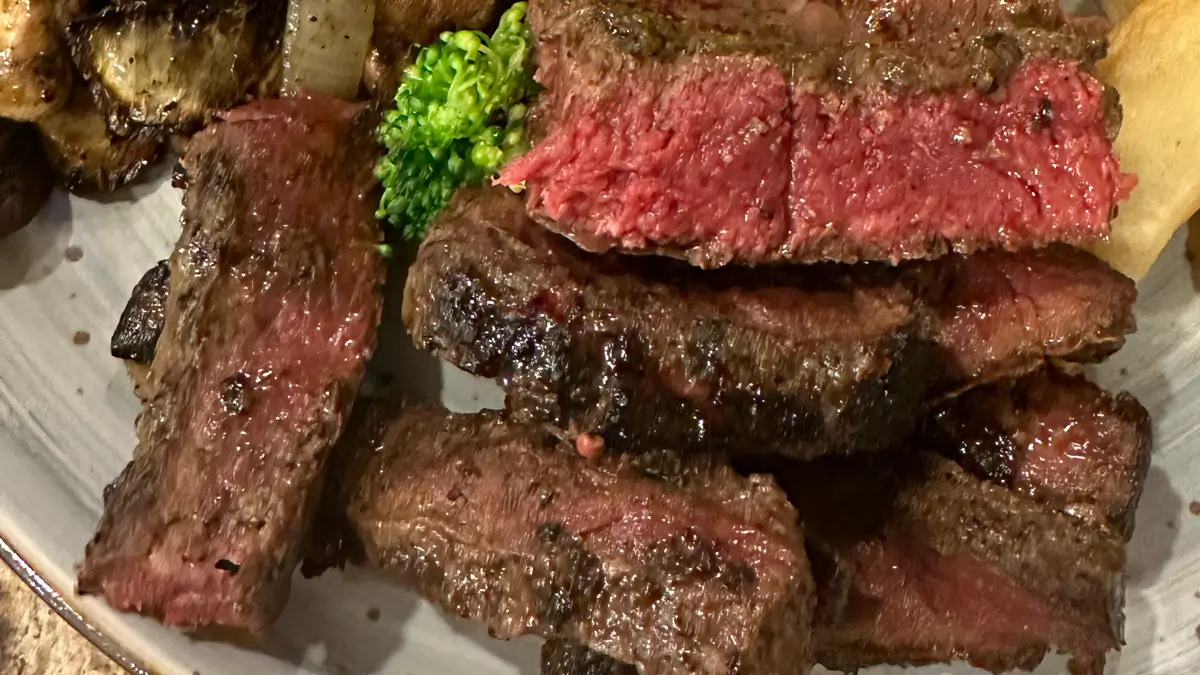
Because our diets and environments have shaped both physical and cultural adaptations and evolution. And I was devastated last month when I walked into my garage and noticed a foul smell. It was the elk in the freezer I’d left partially open over the weekend. Fifty plus pounds — all gone.
At least I still have mahi fillets in the indoor freezer.
Appreciate Our Work?
You can support the content we're creating by simply buying us a beer. Staying hydrated keeps the content coming.
Click the image to send a small donation. Cheers!